Net-Zero-Communities_1000x600.jpg

August 18, 2023 wicsummit0

The built environment contributes significantly to global carbon emissions, making it crucial to take steps towards reducing its carbon footprint. In this article, we will examine the importance of decarbonising buildings in the GCC, and the required collaborative efforts by the public and private sectors to achieve national Net Zero ambitions. Green building practices, renewable energy sources, and energy-efficient technologies play a role in meeting the 1.5-degree target – limiting the global average temperature increase to 1.5°C above pre-industrial levels.

However, the path to Net Zero buildings requires integrated planning for low-carbon communities, and the adoption of a comprehensive building decarbonisation methodology, underpinned by data-driven solutions developed to decarbonise existing building portfolios in an effective way. As the UAE will host the 28th Conference of the Parties to the UN Framework Convention on Climate Change (COP28), there is a great opportunity to drive collaboration and action plans towards mitigating climate change risks and decarbonising the built environment across the region.

National Targets in the GCC

Countries in the GCC region are taking significant initiatives to reduce their carbon footprint in the built environment by setting targets for renewable energy generation and implementing energy efficiency programs. The United Arab Emirates (UAE) has committed to generating 50% of its energy from clean sources by 2050, while the Kingdom of Saudi Arabia (KSA) has set a target to generate 50% of its electricity from renewable sources by 2030.

Qatar aims to generate 20% of its electricity from renewable energy sources by 2030. Oman has also set a goal of generating 30% of its energy from renewable sources by 2030. In Bahrain, the government has launched a program to retrofit buildings with energy-efficient technologies. In 2020, Saudi Arabia launched the concept of the circular carbon economy at the G20 summit to align fossil fuel producers’ interests with Net Zero emissions trajectories.

Master Planning of Low-Carbon Communities

The GCC region has an advantage in greenfield planning for creating sustainable and low-carbon communities. However, there has been a tendency in the region to prioritise gated communities and car-dependent lifestyles.

According to the SNC-Lavalin Group’s report on ‘Engineering Net Zero in the GCC’, a people-centric approach is necessary, considering access to community amenities and alternative modes of transportation. As the report emphasises, holistic city planning and design are required to address carbon emissions in the built environment, energy, and transport sectors.

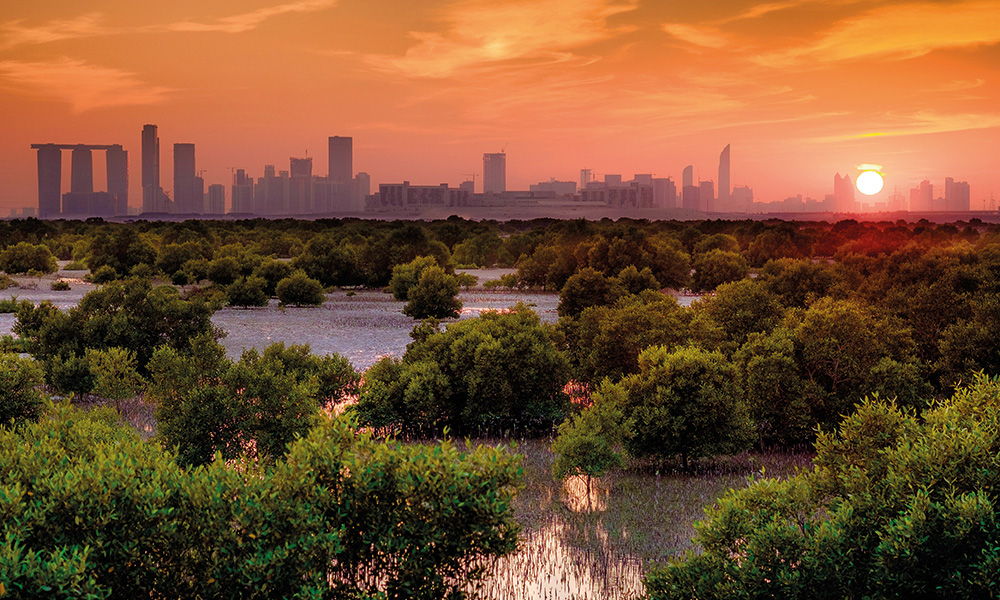
Saudi Arabia is currently delivering megaprojects along the Red Sea coast to develop cities powered by 100% renewable energy, including solar, wind, and green hydrogen. The cities are envisioned to be Net Zero carbon by prioritising people’s health and well-being over carbon-intensive transportation and infrastructure. The UAE’s Dubai 2040 Urban Master Plan focuses on sustainable development, reducing energy demands, and promoting sustainable mobility. The plan also promotes integrated communities with green spaces and recreational facilities.

Building Decarbonisation

The Intergovernmental Panel on Climate Change (IPCC) highlights that greenhouse gas emissions need to decline 43% by 2030 relative to 2019 levels to limit global warming to 1.5°C. Buildings make up almost 40% of global carbon emissions with 28% coming from existing stock. Therefore, a comprehensive building decarbonisation methodology needs to be implemented to achieve the 1.5-degree target.

The methodology focuses on establishing a baseline of current emissions to set decarbonisation ambitions and targets and develop a tailored strategy. By following this approach, an organisation can measure and report progress on the plan and make any required adjustments to meet its building decarbonisation targets.

To help reduce carbon emissions for existing buildings, SNC-Lavalin launched ‘Decarbonomics’, an innovative data-driven solution designed to decarbonise existing assets in a cost-effective manner. Recognising that buildings contribute significantly to global carbon emissions, with a large portion attributed to existing structures, Decarbonomics focuses on making carbon visible and maximising the value of assets, while reducing carbon footprint. It generates robust and intuitive portfolio and asset-level views of the organisation’s decarbonisation journey and the associated cost across the entire estate regardless of condition or global distribution.

The decarbonisation approach begins by capturing, structuring, and managing portfolio data, including benchmarking current performance, and addressing any data gaps. Leveraging industry-leading carbon data insights, Decarbonomics analyses carbon, cost, and engineering solutions to develop customised roadmaps for cost-effective implementation. Artificial intelligence and machine learning are utilised for scenario testing and generating optimal decarbonisation strategies.

Challenges and Solutions

Despite progress, challenges remain, including the high initial costs of implementing green technologies and the need for greater education and awareness of sustainable building practices. Hence, addressing challenges to the decarbonisation of the built environment in the GCC requires several considerations.

First, it is crucial to implement policy and legislation for strategic land use planning that prioritises sustainability. This entails revitalising existing sites in metropolitan areas rather than extensive new construction. Additionally, stricter rules should be enforced for regenerating and retrofitting existing buildings to enhance energy efficiency, internal comfort, and overall well-being. The Emirates Green Building Council has launched initiatives to promote sustainable building practices in the UAE, including retrofit programs for energy-efficient technologies.

Second, it is important to establish incentives and drivers for these initiatives to accelerate their implementation. Shifting thinking around energy use is vital for achieving sustainability goals. Demand-side management, which involves actively managing and optimising energy consumption, also play a role in energy planning. Governments can promote effective facility management planning from the design stage of major assets. This approach ensures that investments perform optimally, with controlled maintenance costs, and attract higher-value tenants.

Third, building decarbonisation requires not only looking at the capital cost involved, but also evaluating the whole life-cycle cost of the building from materials to systems, specifications and operations and maintenance. The developers and operators of the building portfolio can benefit from creating an intelligent cost and program optimised decarbonisation roadmap that integrates existing life-cycle replacement with asset management data.

Collaboration between all stakeholders is key to achieving the goal of decarbonising the building sector in the GCC. Integrating land use and urban transport planning into community and building design is necessary to reduce energy needs and achieve Net Zero goals. The efforts should be accelerated for retrofitting existing buildings with energy-efficient technologies, promoting renewable energy systems, and enforcing green building codes and regulations.

The Way Forward

Achieving the ambitious 1.5-degree target and mitigating the severe impacts of climate change require bold actions from all sectors, including the building and construction industries. These industries can contribute by adopting sustainable building practices and transitioning to renewable energy sources, aiming to reduce carbon emissions by 50% by 2030 and achieve zero net emissions by 2050, in line with the IPCC proposition. Global initiatives such as the European Union’s ‘Renovation Wave’ and the US Department of Energy’s ‘Better Buildings Initiative’ provide valuable lessons and emphasise the importance of energy efficiency and decarbonisation in buildings.

Delivering high-performing built environment solutions is a crucial step towards decarbonising cities in the GCC. To bring about significant change across the built environment lifecycle, it is essential to adopt comprehensive decarbonisation methodologies, address policy, enhance legislation, and review codes.

A well-communicated and clear strategy highlighting the advantages of owning and operating low-carbon, highly efficient buildings can drive positive changes aligned with the national Net Zero targets. By prioritising these measures, the region can effectively transition towards a sustainable and resilient built environment.

The post A pathway to sustainability appeared first on Middle East Construction News.

Source: MEConstructionNews

Voltaire-Vessel_1000x600.jpg

August 18, 2023 wicsummit0

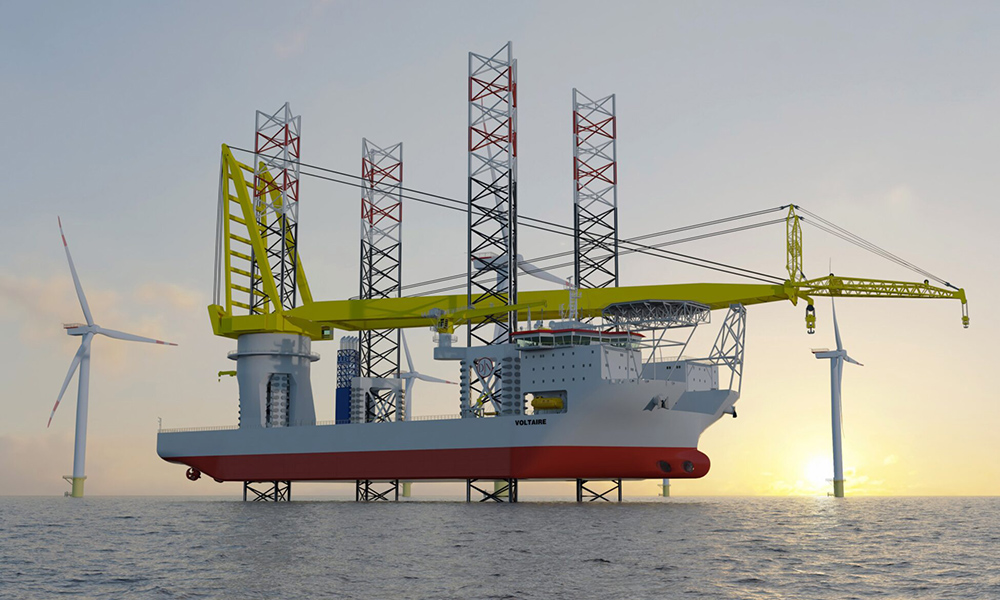
The jack-up vessel Voltaire is said to be in position to install the first offshore wind turbine at the Dogger Bank Wind Farm. The move signals the start of construction of the sustainable power project, which is expected to feature a total of 277 turbines on completion.

The Voltaire is billed as the largest vessel of its kind in the world, with a lifting capacity of 3,200t. It has been commissioned to operate on all phases of Dogger Bank, installing GE Renewable Energy’s 13MW Haliade-X turbines approximately 128km from the UK’s Yorkshire coast, a report noted.

Once complete in 2026, Dogger Bank (phases A, B and C) will be the world’s largest offshore wind farm, with an installed capacity of 3.6GW. The turbines will occupy an area close to the size of Greater London, which is said to make Dogger Bank more than twice the size of the next largest offshore wind farm. The project will provide electricity for up to six million homes.

The project is a collaboration between UK-based developer SSE Renewables and Equinor and Vårgrønn, joint venture partners from Norway. According to the report, SSE Renewables will oversee the development and construction of the project, with Equinor responsible for the farm’s operation over its anticipated 35-year operational lifespan.

The project is expected to generate over 2,000 job opportunities, primarily in the North East of England.

The challenging conditions in the North Sea have led to the introduction of a number of firsts for the project, including the use of an unmanned offshore High Voltage Direct Current (HVDC) substation platform.

SSE’s CEO, Alistair Phillips-Davies said, “Dogger Bank is one of the biggest and most complex engineering and infrastructure projects anywhere in the world. Our progress here with our JV partners Equinor and Vårgrønn proves that offshore wind projects of this size are now mainstream and will help turbocharge the transition to the cheaper, cleaner and more secure energy system we all want to see.”

“It is action, not ambition, that will secure our energy future and this project shows action on a massive scale. But we will need many more Dogger Banks to achieve our goals and we look forward to working with government to bring forward more projects at pace,” he added.

The post Construction of world’s largest offshore wind farm commences appeared first on Middle East Construction News.

Source: MEConstructionNews


Azizi-Beachfront-One_1_1000x600.jpg

August 18, 2023 wicsummit0

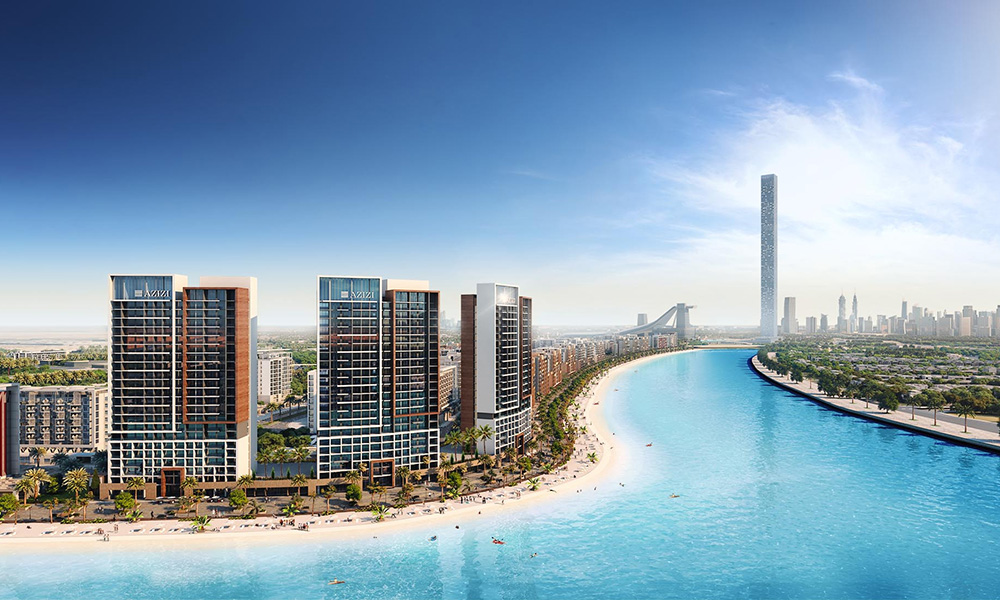
UAE-based Azizi Developments has broadened its collaboration with global technology firm Schneider Electric. The firm will be using Schneider’s electrical wiring accessories, including switches and sockets, for three of its premium projects in Dubai – Beachfront in Riviera as well as Pearl and Amber in the rapidly growing Al Furjan.

On the collaboration, CEO Farhad Azizi said, “By extending our partnership with Schneider, the highly esteemed leader in electrical components, we reaffirm our commitment to sourcing only the very best-in-class construction materials and components for our developments and thereby enriching the lives of those who invest and reside in them.”

Schneider Electric is well known for its innovative, high-quality, and sustainable digital automation and energy management solutions. These encompass homes, buildings, data centres, infrastructure, and industries by combining energy technologies, real-time automation, software, and services.

Azizi concluded, “Schneider has proven its many merits over and over again, with outstandingly well-crafted product ranges and an impeccable attention to detail.”

The post Azizi extends partnership with Schneider Electric appeared first on Middle East Construction News.

Source: MEConstructionNews

Bahrain_1000x600.jpg

August 18, 2023 wicsummit0

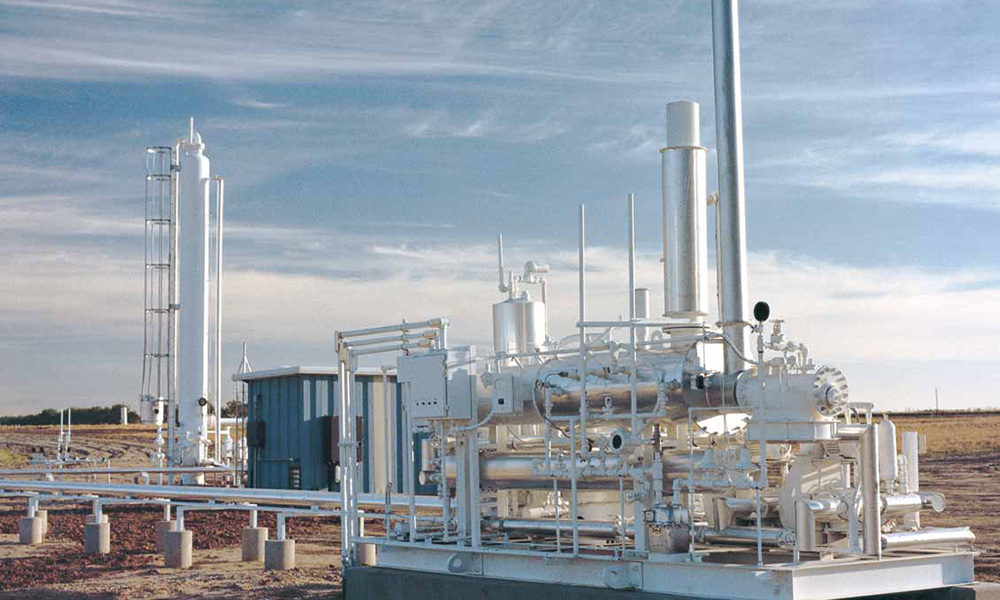
Tatweer Petroleum has issued an engineering, procurement and construction (EPC) tender for its gas dehydration facilities in the Awali region in Bahrain, according to the Kingdom’s Tender Board. The tenders relate specifically to non-associated gas well hook-ups, associated pipelines and tie-ins.

An international oil and gas solutions company based in Bahrain, Tatweer is a wholly-owned unit of Bapco Energies, which acts as the steward for the government’s investment in a diversified range of energy-related companies.

It is now responsible for all upstream operations in the Kingdom, including oil and gas exploration, development, and production activities, in addition to gas distribution and sales.

Tatweer Petroleum is currently undertaking a phased field development project (i.e. long-term field development) to install non-associated gas (NAG) compressor facilities (NCF’s) stations and remote gas dehydration units (GDU) to maintain gas deliverability from the Awali field.

Meanwhile, current bids will be open to only those contractors who comply with the set criteria, for example, EPC certification confirmed through ISO 9001/2015 accreditation, and in-house handling of engineering and procurement activities with no subcontractors involved.

The last date for submitting the bids has been set at 3rd September 2023. The entire project is set to be completed within a five-year period.

The post Tenders issued for Bahrain gas units appeared first on Middle East Construction News.

Source: MEConstructionNews

Food-Beverage_1000x600.jpg

August 17, 2023 wicsummit0

Thomas & Adamson has announced that it is delivering cost- and project-management services on four new F&B projects totalling 52,000sqft in Dubai and Abu Dhabi. The total development value of the projects is said to be US $35mn.

The firm notes that, post pandemic, the built environment has had to grapple with numerous supply chain challenges, including logistics bottlenecks and rising costs; supply-demand imbalances; shifting material preferences; extreme weather events; global conflicts, and even labour shortages.

Driven by diverse factors, these supply chain issues have had a pronounced effect on construction costs; in late 2022, one of the largest developers in Saudi Arabia, Dar Al Arkan, said it was forecasting a 15% to 20% rise in costs in the next 12 months, it added.

“Construction costs which include materials, labour etc. have increased by 8% to 12% year-on-year from 2020 to 2023. Cumulatively, that amounts to the cost of construction increasing by between 28% to 35% compared to pre-pandemic levels. This has had a significant impact on project budgets and stakeholder margins, which were already under pressure pre-pandemic. This means it’s absolutely essential that projects are delivered meeting quality standards, and agreed timelines, whilst remaining on budget. Taking into account our successful track record, the experience our team possesses with bringing projects in Europe, the Middle East and the United States to successful fruition, and our highly collaborative approach, we are on track to exceed our client’s expectations across these four new builds,” says Rudolph van Wyk, Director at Thomas and Adamson Middle East.

Sharing details on the projects, T&A said in Dubai it had delivered PM services for two new F&B offerings in the Dubai Hills district. Working with client Hotaru Holdings and interior fit-out company A&T Group Interiors, the company pointed out that it is facilitating the delivery of two unique Asian cuisine restaurants. Comprising two units totalling an area of 7,000sqft, both restaurants are expected to contribute significantly to the UAE’s fast-growing F&B scene.

The firm also stated it has just been appointed to deliver CM on a brand-new project with Caprice Holdings, owner of some of London’s oldest and most classic F&B establishments. Located in Dubai’s DIFC, the brief is to ensure the client is met with a reputation for culinary excellence, redefining Dubai’s dining landscape, captivating patrons, and becoming an iconic destination for indulgent gastronomy. This 15,220sqft, one plus mezzanine is the first from the brand’s global footprint to launch in the UAE.

In the capital, T&A highlighted it is working closely with an F&B asset owner and the broader supply chain, delivering both PM and CM services, to ensure a 30,000sqft project is delivered in line with the client’s expectations. The project is expected to achieve the Estidama Pearl 2 rating.

“Thomas & Adamson is honoured to work with its clients in both emirates on these exceptional F&B projects. While projects differ from each other, each will contribute significantly to the UAE’s thriving F&B sector, and we are pleased to be a part of their development journeys. F&B projects are complex and require a substantial commitment from every stakeholder to ensure that quality, time schedules, and budgets are maintained. Applying our experience as a global business has enabled us to achieve continuous success on a variety of construction builds for over 85 years and we are confident our exceptional service offering, and experience will guide these projects to successful conclusion,” concluded Wyk.

The post Thomas & Adamson wins contract for services on F&B projects worth $35mn appeared first on Middle East Construction News.

Source: MEConstructionNews


Damac-Coral-Reef1_1000x600.jpg

August 17, 2023 wicsummit0

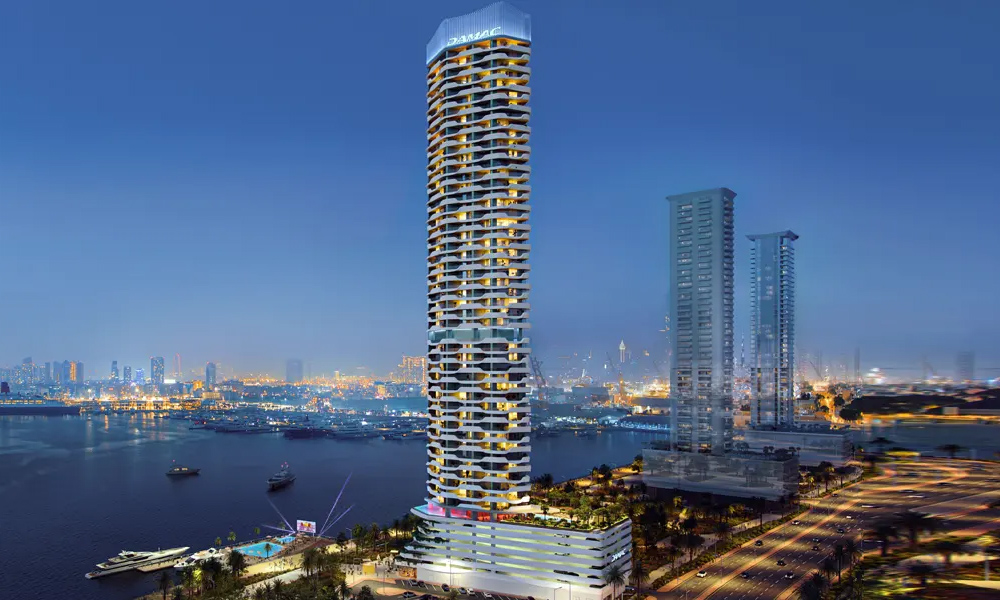
Damac Properties has announced the launch of its latest project, Damac Coral Reef, to be developed as a core element of Dubai Maritime City. The new property aims to offer a luxurious seaside waterfront haven and marks a collaboration with artist Vincent Faudemer, who is celebrated for his captivating ‘Babolex’ collection.

Throughout the project, Faudemer will design a bespoke ‘Babolex’ collection exclusively for the development’s interiors, consistently infusing them with an aura of creativity and elegance and maximising light and space, the developer said.

Commenting on the launch, Niall McLoughlin, Senior Vice President at Damac International said, “Damac Coral Reef is a testament to our commitment to pushing the boundaries of luxury living. By collaborating with Vincent Faudemer, we not only aim to offer a unique residential experience but also to create an immersive space where art and lifestyle seamlessly come together. This project is a true embodiment of our dedication to innovation and excellence.”

Faudemer’s key themes often draw inspiration from cherished childhood characters like Babar, The Little Prince, and other iconic figures, which the artist transforms into artistic sculptures using a blend of resin, bronze, and silver nitrate.

His masterful reinterpretation of these beloved symbols, sometimes intertwined with luxury fashion house branding, offers a thought-provoking commentary on modern society.

Damac Coral Reef is designed to provide residents with all the lifestyle advantages of coastal living – and the waterfront complex is not only the latest addition to Damac’s portfolio of branded, design-themed residences, but is the developer’s sixth tower launch this year.

The post Damac Coral Reef to use exclusive Faudemer designs appeared first on Middle East Construction News.

Source: MEConstructionNews


Desalination1_1000x600.jpg

August 17, 2023 wicsummit0

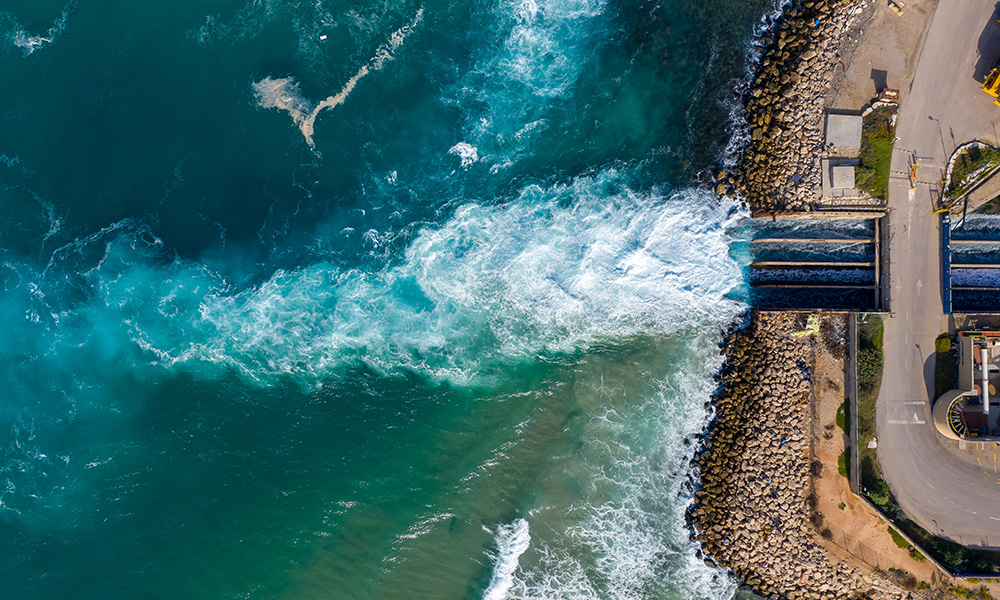
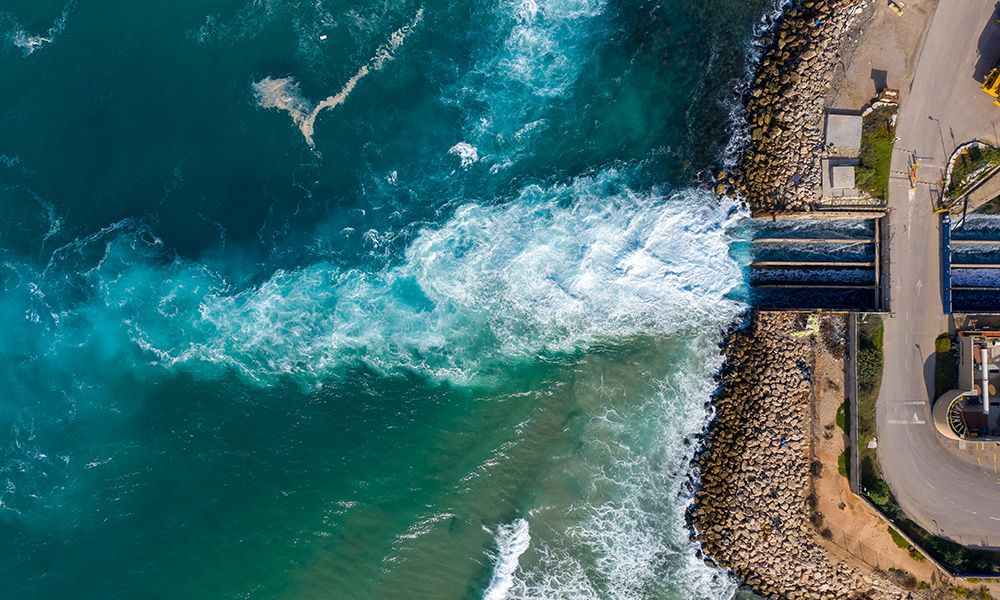
Acwa Power has emerged as the preferred bidder for the construction and operation of the Hassyan Phase 1 Independent Water Producer (IWP) project. Being set up at with an investment of US $914mn, the plant will process 180 million imperial gallons per day (MIGD) of sea water, using ‘reverse osmosis’ technology.

DEWA said that the project is the largest of its kind in the world for water production based on SWRO technology and using solar energy.

This is in fact DEWA’s first Independent Water Producer (IWP) project. The water desalination capacity in the emirate is currently 490 MIGD, and will increase to 670 MIGD in 2026 with the completion of the project.

On launching competitive bids for the project on 18th October 2022, DEWA received 29 expressions of interest from international developers, with six international companies qualifying to submit their tenders.

Saeed Mohammed Al Tayer, MD and CEO of DEWA said, “We are building water production plants based on SWRO technology which require less energy than multi-stage flash distillation (MSF) plants, making it a more sustainable choice for water desalination. By 2030, we aim to produce 100% of desalinated water by a mix of clean energy and waste heat. The new project aligns with Dubai’s unparalleled economic growth and the emirate’s thriving construction sector. This complements the Dubai 2040 Urban Master Plan, addresses the substantial population growth, and meets the steadily increasing demand for water in domestic, commercial, and other consumer sectors.”

DEWA, he added, has also achieved a world record by receiving the lowest bid ever recorded for a project of this kind, at $0.36536 per cu/m of desalinated water.

The post World record bid submitted for Dubai desalination plant appeared first on Middle East Construction News.

Source: MEConstructionNews

Rosewood-RSG1_1000x600.jpg

August 16, 2023 wicsummit0

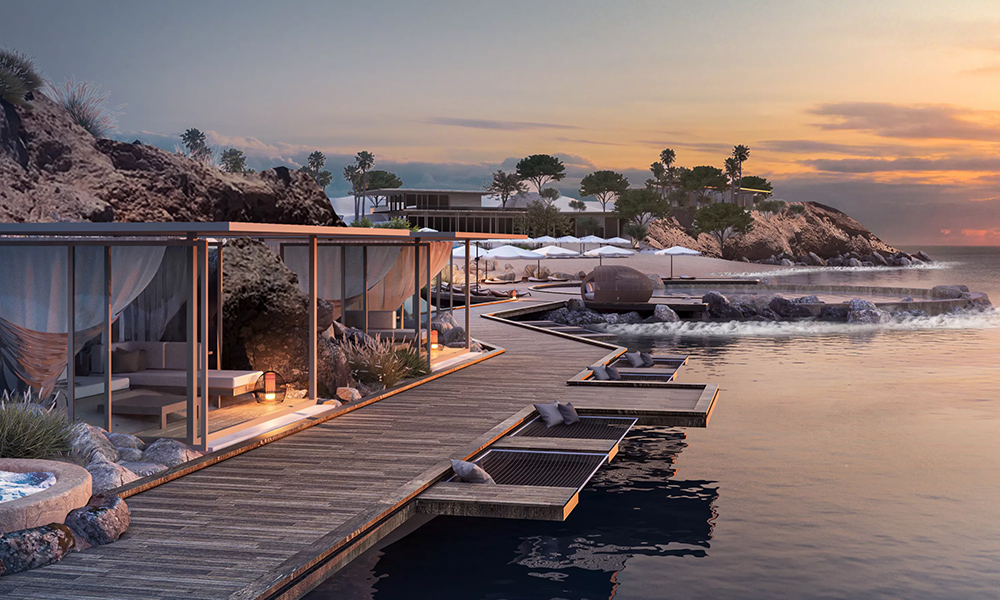
Red Sea Global (RSG) has awarded the design contract for the Rosewood Hotels and Resort at Triple Bay to Saudi-based Salco. Per the terms of the deal, Salco, a specialist in external works, site development, infrastructure, utilities, landscape, and irrigation, will be responsible for softscape works.

The Saudi group will transform the outdoor areas of the property, in line with the design concept which aims to implement a spectacular landscape for guests to enjoy, the firm explained in its statement.

“We are thrilled to collaborate with Red Sea Global on this monumental project. Our partnership signifies a shared commitment to delivering exceptional projects that surpass expectations. Like Red Sea Global, we are driven by a common vision of excellence, sustainability, and environmental stewardship,” said Salco CEO Yehya Kreidieh.

Discussing the contract award, Fahad Al Balawi, Head of construction at Amaala said they are delighted to appoint Salco for softscape works. He noted, “We signed them up for this Rosewood Hotels and Resort project mainly because of their expertise in delivering extraordinary outdoor spaces.”

Established in 1982, Salco brings more than 40 years of expertise and an exceptional track record which makes them an ideal partner for this landmark project, he added.

The post RSG appoints Salco to Rosewood Hotels and Resort project at Triple Bay appeared first on Middle East Construction News.

Source: MEConstructionNews


Ladybird-Nursery-GAJ_1000x600.jpg

August 16, 2023 wicsummit0

Godwin Austen Johnson (GAJ) has said that Dubai’s Ladybird Nursery is the second in the Middle East to achieve LEED Gold Certification. GAJ designed the project, which is located in Al Barsha, Dubai, and said that the first Ladybird Early Learning Centre – which it also designed – was the first to achieve the certification in 2016.

Based on a points system, LEED certification is a globally recognised symbol of sustainability achievement providing a framework for healthy, efficient, carbon and cost-saving green buildings, the firm said in its statement.

The Ladybird Early Learning Centre and the Ladybird Nursery have both achieved the highest scores for a pre-school outside of the United States, with scores of 72 points and 68 points respectively, and are the only LEED certified nursery schools in the UAE.

“Creating sustainable, healthy buildings is more about being clever with the design, understanding and working with the local vernacular architecture air infiltration and by utilising natural lighting where possible. It doesn’t need to be overly complicated,” said Jason Burnside, Managing Director at Godwin Austen Johnson.

Completed in August 2022, the Ladybird Nursery is a single storey building with indoor and outdoor play areas. Each of the three age groups defined within the Ladybird Nursery has their own distinct area and all the spaces are accessed through the main reception for security and supervision.

The school was designed with open classrooms and shared learning spaces to create an unrestrained and boundary-free environment using architectural features such as roof overhangs, deeper windows, and the overall orientation of the building for more passive sustainable design strategies, the firm added.

Burnside added, “We employed a number of both active and passive measures to achieve LEED Gold status including the installation of high performance variable refrigerant flow (VRF) units which are highly energy efficient providing zoned comfort with precise temperature control. We also specified LED light fittings connected to light and PIR sensors.”

Walls and adjoining facilities are kept to a minimum to encourage flow and avoid inhibitory barriers and additional innovative learning and social spaces have been created within the nooks and corners of the building. Small, coloured pods in the shape of small houses have been added as storage spaces, the statement concluded.

The post Ladybird Nursery in Dubai achieves LEED Gold Certification says GAJ appeared first on Middle East Construction News.

Source: MEConstructionNews

Dubai-Beach1_1000x600.jpg

August 15, 2023 wicsummit0

A new report from Asteco says that the Dubai real estate market has continued to significantly outperform many of its worldwide peers; and meanwhile, sales activity for completed and off-plan developments in Abu Dhabi reached highs not seen in almost a decade. Both emirates demonstrated great resilience in the face of rising interest rates and inflation, stated the Q2 2023 report.

For Abu Dhabi, the Asteco report indicated that approximately 1,400 apartments were added to the market during Q2 2023, with another 2,200 apartments and 850 villas expected for delivery by the end of the year.

Whilst new supply was distributed across most established International Investment Zones, the majority was delivered within the Al Reem Island and Saadiyat Island master plan communities in Abu Dhabi.

Several new projects are also in the planning or design stage, with official announcements expected later in 2023 and early 2024. The market also saw a number of new projects launched for sale in Q2 2023, including Murjan Saadiyat, The Source on Saadiyat Island and Jubail Island – Phase 3. In the rental market, rates for both apartments and villas within prime and high-quality residential developments increased between 2% and 5% over Q2 2023.

Prime villa communities, particularly those located on Saadiyat and Yas Islands, remain the most sought-after, with rental hikes of up to 10% over the same period last year. Mid and low-end developments remained relatively stable with nominal rental rate changes. Lower-end stock, on the other hand, has continued to face pressure from rising supply and an ever-expanding number of options.

Furthermore, there was high demand for office space, notably in the Grade A/B+ category, with interest expressed from both existing companies seeking to expand their footprint and new entrants to the Abu Dhabi market.

Strong transactional volumes for completed and off-plan developments were also recorded in Q2, with the end-user segment accounting for a significant amount of this demand.

Average villa sales prices within Abu Dhabi increased by nearly 2% throughout the quarter. However, sales prices for high-end and well-established villa communities continue to outperform, with some achieving sales price growth closer to 6%.

In addition, prime and high-quality off plan projects, located on Saadiyat and Yas Islands, have been well received with sales prices ranging between $408 and $1,034 per sqft.

On the Dubai market, Asteco said almost 11,000 residential units were delivered over Q2 2023, with apartments accounting for the majority of this stock (9,400 units).

Although villa supply slowed over the quarter, it is expected to pick up again in the second half of the year. The pace of supply is forecasted to further increase thereafter, with close to 20,000 completions planned for 2024/25.

Despite continued demand from existing tenants and newcomers, the market is not immune to changes in the real estate dynamics, including those at a micro level. Some areas, like Meydan (with the addition of Azizi Riviera), Arabian Ranches 3, and Al Furjan, saw minimal rental growth due to increased supply.

On the other hand, popular communities like Dubai Silicon Oasis (Cedre Villas), Al Waha/Layan Villas, Jumeirah Beach Residence (JBR), and The Greens/Views experienced above-average rent increases due to limited availability and tenant movement.

In the rental market, average apartment, villa, and office rental rates increased by 6%, 3% and 6% respectively over the quarter and 21%, 23% and 25% annually. Though the upward pressure continued unabated across all asset classes, the pace of increase has slowed within some communities and asset classes, particularly within the villa segment.

The post Abu Dhabi and Dubai real estate buoyant in Q2 appeared first on Middle East Construction News.

Source: MEConstructionNews